How a Telecare Service Stayed Connected During a Major Network Outage and What It Meant for a 92-Year-Old Alone at 1am
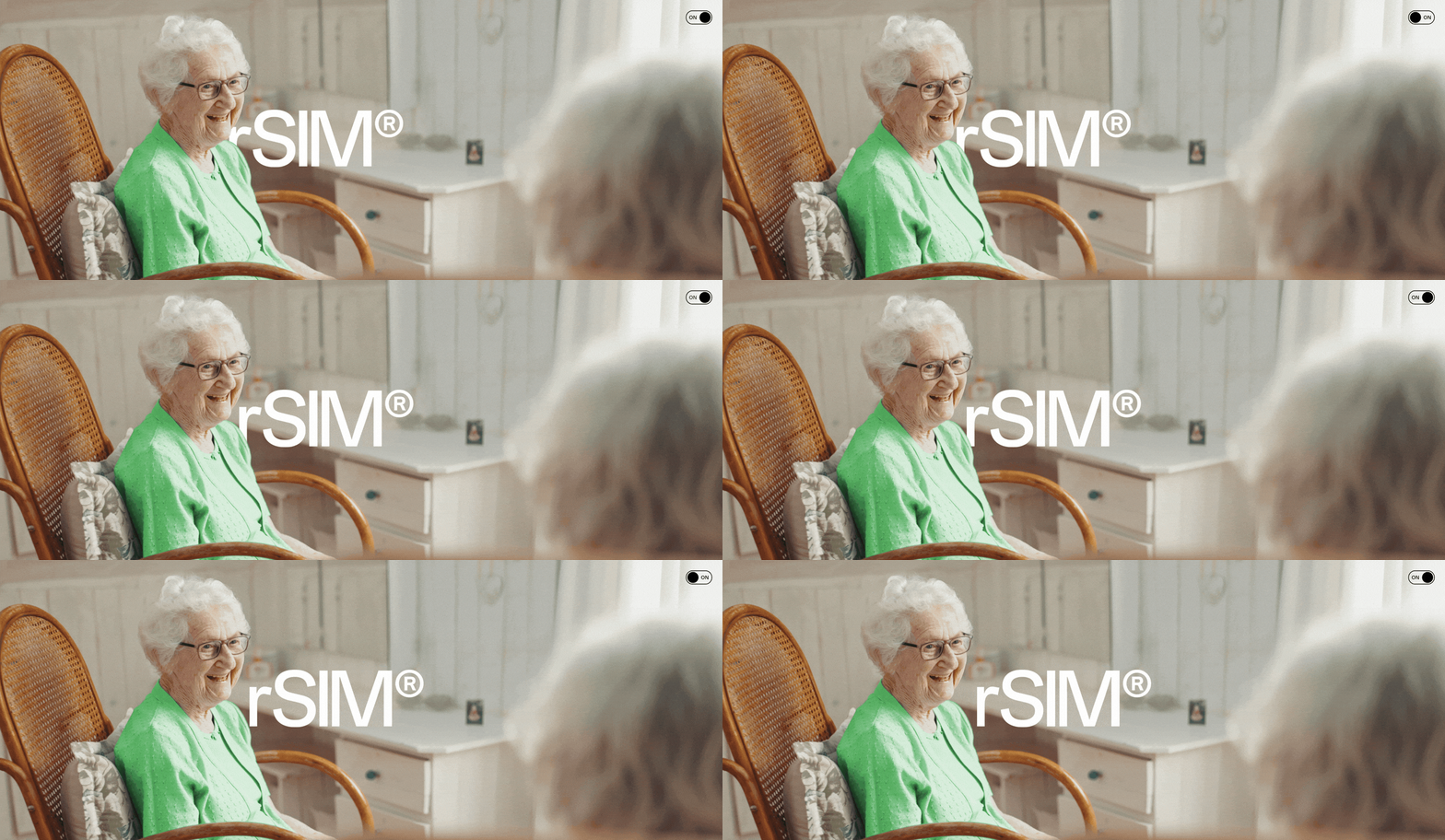
It was the early hours of a February morning in Nottingham when a 92-year-old resident, living alone with multiple health conditions, pressed her pendant alarm. She needed reassurance, and she needed someone to answer.
The call reached Nottingham on Call’s monitoring centre immediately, and operators followed standard safeguarding procedures before confirming she was safe. The call closed without incident, exactly as it was meant to.
What nobody in that exchange realised at the time was that a significant outage had been unfolding across the primary mobile network for almost two hours. It was the kind of disruption that, on a device relying on a single network core, could easily have caused delays or a complete loss of connectivity at the exact moment it mattered most.
But, that isn’t what happened here because her Eliza hub was fitted with rSIM. When instability appeared on the primary network, rSIM detected it and switched automatically to a secondary profile, maintaining the connection throughout the incident without any delay, failure, or need for manual intervention.
Dave Miles, Development Manager at Nottingham on Call, explained why that matters for a service in the middle of a major digital transition: “Nottingham on Call has recently concluded its analogue to digital migration with the support from Careium by deploying over 800 Eliza care alarms with embedded rSIM. Having an rSIM, which will switch seamlessly between network providers, gives reassurance to us as a service, as well as to our customers, that alerts will always get through despite any network issues, as did happen in this case.”
This is what resilient connectivity looks like in practice, and it rarely looks like much at all. rSIM works by monitoring two independent operator networks at once, and the moment one shows signs of instability, the device switches to the other within minutes, without waiting on an operator to identify and resolve the issue first.
Max Stevens, Head of Telecare IoT at CSL, said stories like this are becoming more common as digital telecare scales across the UK: “This is a strong example of the true value that rSIM delivers. It is making a tangible difference in telecare by adding another layer of resilience where it matters most: in people’s homes and lives. We are increasingly hearing real-life stories where resilient connectivity has helped keep vulnerable individuals connected to support at critical moments. These examples are becoming more regular, and they underline exactly why DualCore technology is so important for the future of Technology Enabled Care.”
For Careium, this incident reflects something larger than one night in Nottingham. The organisation now has more than 60,000 rSIMs active across its estate, each one operating with the same quiet intelligence that kept this particular call connected in February. Gary Clark, Technical Director at Careium UK, framed it as proof of what the technology delivers at scale: “This case perfectly demonstrates what that means in reality: uninterrupted connectivity at a moment when it genuinely matters. It’s a powerful example of how the right technology, deployed correctly, can quietly transform outcomes for vulnerable people.”
The UK’s shift from analogue to digital telecare is well underway, and for every provider making that transition, the real test isn’t whether the new technology works under normal conditions. It’s whether it keeps working when the network doesn’t.
In Nottingham, that test arrived without warning at 1am on a February morning. The network was failing in the background, and a 92-year-old pressed her pendant, not knowing any of it. Her call went through anyway.
 30 June 2026