
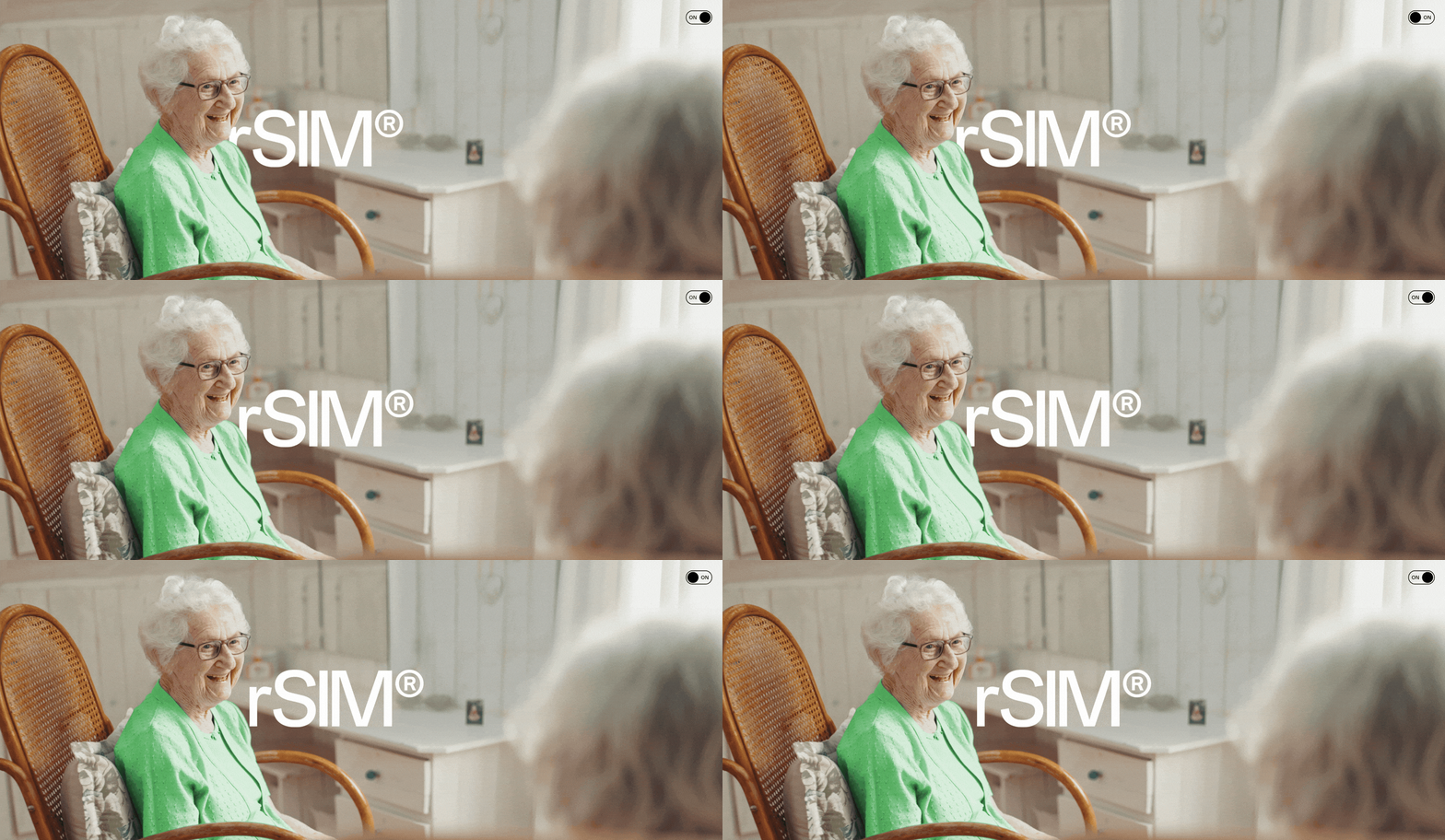
How a Connected Care Provider Stayed Online During a Live Network Outage, and Why It’s a Wake-Up Call for the Industry
It was 1 a.m. when a 92-year-old woman, living alone with several health conditions, pressed her medical alert pendant. She needed someone to answer, and she needed it fast.
The call reached the monitoring center right away. Operators worked through standard safeguarding steps and confirmed she was safe before closing out the call. On paper, it was a routine night. Nothing about the interaction suggested anything had gone wrong.
Except something had. Behind the scenes, the carrier network her device relied on was in the middle of a two-hour outage. Under normal circumstances, a device tethered to a single network core could have gone dark at exactly the wrong moment, leaving a vulnerable person unable to reach help when she needed it most.
That’s not what happened here. Her connected care device, deployed by UK telecare provider Nottingham on Call as part of a wider digital rollout across more than 800 units, was equipped with rSIM. rSIM is a resilient SIM technology built to monitor two independent carrier networks at once. The second it picked up instability on the primary network, it switched to the backup, automatically and without a hitch. No dropped call, no delay, no one had to lift a finger.
That’s the bar connected care technology has to clear. Not whether it works on a good day, but whether it holds up the one night the network doesn’t.
Max Stevens, Head of Telecare IoT at CSL, has seen this play out more than once: “This is a strong example of the true value that rSIM delivers. It is making a tangible difference by adding another layer of resilience where it matters most: in people’s homes and lives. We are increasingly hearing real-life stories where resilient connectivity has helped keep vulnerable individuals connected to support at critical moments.”
It’s a problem that goes well beyond one provider or one outage. Carrier outages happen more often than most people realize, and for organizations running safety-critical devices, a single point of failure is a liability they can’t afford. rSIM is already protecting more than 60,000 connected devices in the field, each one running the same dual-network failover that kept this call connected.
For any organization deploying medical alert systems, remote monitoring, or other safety-critical IoT devices, the takeaway is straightforward. Reliable connectivity can’t depend on a single network working perfectly all the time. It has to be built to keep working when that network fails.
That’s exactly what happened at 1 a.m. on an ordinary night. The network went down. The call still got through.
 30 June 2026